 English
  Arabic
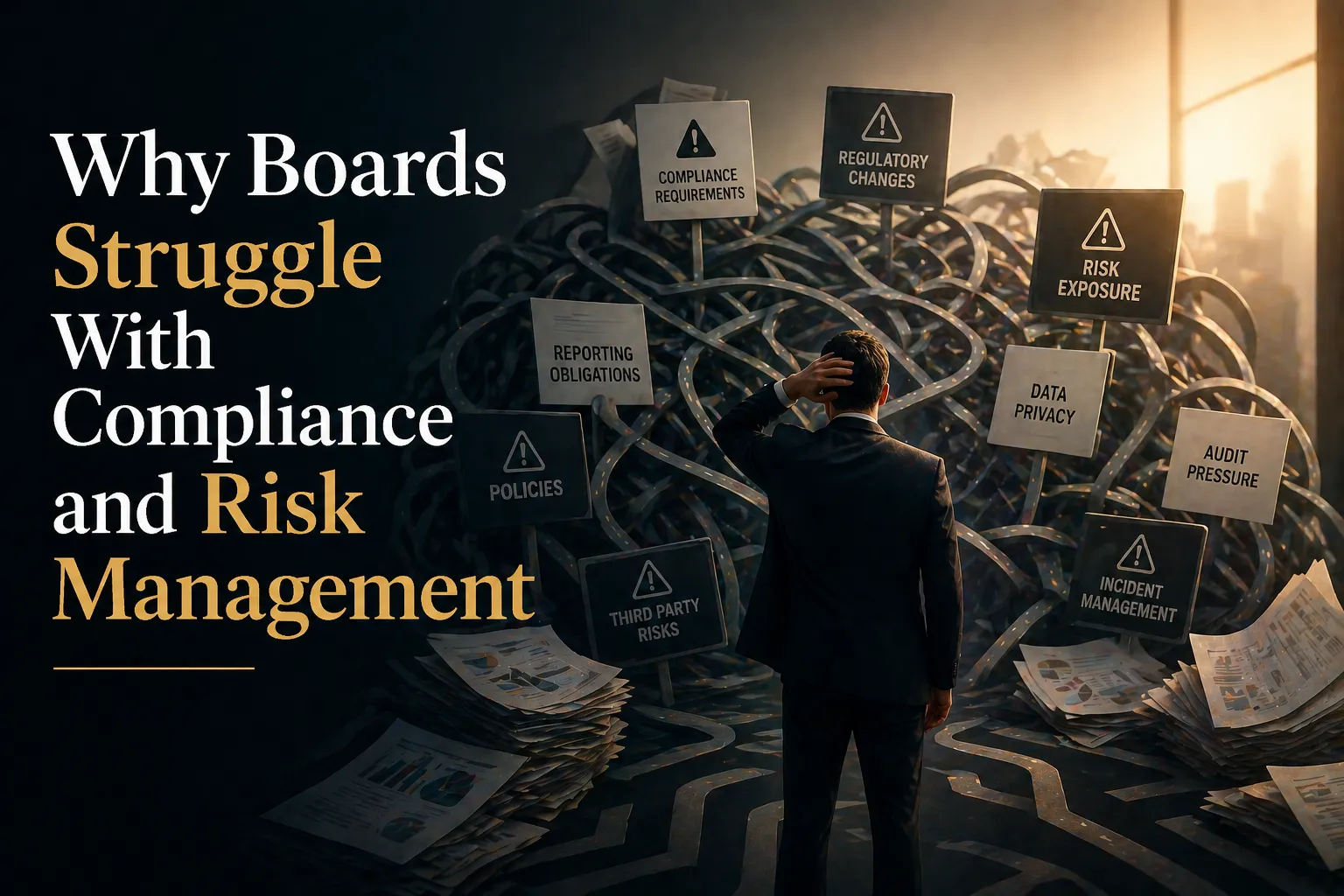
Why Compliance Has Become Harder Than Ever for Boards Compliance is no longer a simple checklist. Modern organizations operate across multiple regions, industries, and regulatory frameworks. This creates a complex environment where boards must constantly monitor evolving requirements. The challenge is not just understanding regulations but applying them consistently across the organization. Boards are expected to ensure compliance without being directly involved in daily operations. This creates a gap between oversight and execution. Former IBM CEO Ginni Rometty once observed: “Growth and comfort do not coexist.” Boards must move beyond comfort zones and actively adapt to changing compliance demands. The...

Why Compliance Has Become Harder Than Ever for Boards
Compliance is no longer a simple checklist. Modern organizations operate across multiple regions, industries, and regulatory frameworks. This creates a complex environment where boards must constantly monitor evolving requirements.
The challenge is not just understanding regulations but applying them consistently across the organization. Boards are expected to ensure compliance without being directly involved in daily operations. This creates a gap between oversight and execution.
Former IBM CEO Ginni Rometty once observed:
“Growth and comfort do not coexist.”
Boards must move beyond comfort zones and actively adapt to changing compliance demands.
The Visibility Problem That Limits Effective Risk Oversight
One of the biggest challenges boards face is lack of visibility into real-time risks. Information is often delayed, fragmented, or presented in formats that are difficult to interpret.
Without clear visibility, boards cannot accurately assess risk levels. This leads to reactive decision-making rather than proactive governance.
Risk management requires timely and accurate data. When this data is not available, organizations become vulnerable to unexpected threats.
Why Risk Management Processes Break Down
Risk management processes often fail due to lack of structure. Responsibilities may not be clearly defined, leading to confusion and inefficiency.
Another issue is reliance on manual processes. Spreadsheets and disconnected systems make it difficult to track and analyze risks effectively.
There is also the challenge of communication gaps. When risk information is not shared consistently, board members may not have a complete picture.
The Real Impact of Compliance Failures
Compliance failures can have serious consequences. Organizations may face regulatory fines, legal action, and reputational damage.
Beyond financial impact, compliance failures weaken trust among stakeholders. Investors, partners, and customers expect organizations to operate responsibly.
Business thinker Clayton Christensen highlighted the importance of accountability:
“Decisions are made based on incentives.”
When compliance is not prioritized, the consequences can be significant.
What High-Performing Boards Do Differently
Boards that excel in compliance and risk management adopt a proactive approach. They invest in systems that provide real-time visibility into risks and compliance activities.
They also establish clear governance structures. Roles and responsibilities are defined, ensuring accountability at every level.
These boards prioritize communication, ensuring that risk information is shared consistently and clearly.
Practical Strategies to Strengthen Compliance and Risk Management
Improving compliance requires a combination of technology and process improvements. Centralized systems can provide a single source of truth for risk and compliance data.
Regular reporting ensures that boards have access to up-to-date information. This allows them to make informed decisions quickly.
Training and awareness programs help board members understand their responsibilities and stay updated on regulatory changes.
Frequently Asked Questions
Why do boards struggle with compliance
Due to complexity, lack of visibility, and fragmented processes.
How can compliance be improved
By using centralized systems and improving communication.
What is the biggest risk in poor compliance
Regulatory penalties and reputational damage.
Final Perspective
Compliance and risk management are essential for stability. Boards that address these challenges proactively can strengthen governance and reduce risk exposure.
Share this article on