 English
  Arabic
Why Board Meetings Are Getting Longer Instead of More Efficient Board meetings are intended to drive strategic decision-making, yet many organizations experience the opposite. Meetings stretch for hours, discussions become repetitive, and outcomes remain unclear. This is not just an operational issue. It is a direct threat to board productivity and governance effectiveness. The primary reason board meetings take too long is the increasing complexity of modern organizations. Boards are expected to review more data, address more risks, and make more informed decisions than ever before. However, the processes used to manage meetings have not evolved at the same pace....

Why Board Meetings Are Getting Longer Instead of More Efficient
Board meetings are intended to drive strategic decision-making, yet many organizations experience the opposite. Meetings stretch for hours, discussions become repetitive, and outcomes remain unclear. This is not just an operational issue. It is a direct threat to board productivity and governance effectiveness.
The primary reason board meetings take too long is the increasing complexity of modern organizations. Boards are expected to review more data, address more risks, and make more informed decisions than ever before. However, the processes used to manage meetings have not evolved at the same pace.
Instead of adapting to modern demands, many boards still rely on outdated practices such as manual agendas, email-based communication, and unstructured discussions. These methods create inefficiencies that accumulate over time.
Management expert Peter Drucker once said:
“There is nothing so useless as doing efficiently that which should not be done at all.”
In many board meetings, time is spent on activities that do not contribute to decision-making.
The Hidden Causes Behind Long Board Meetings
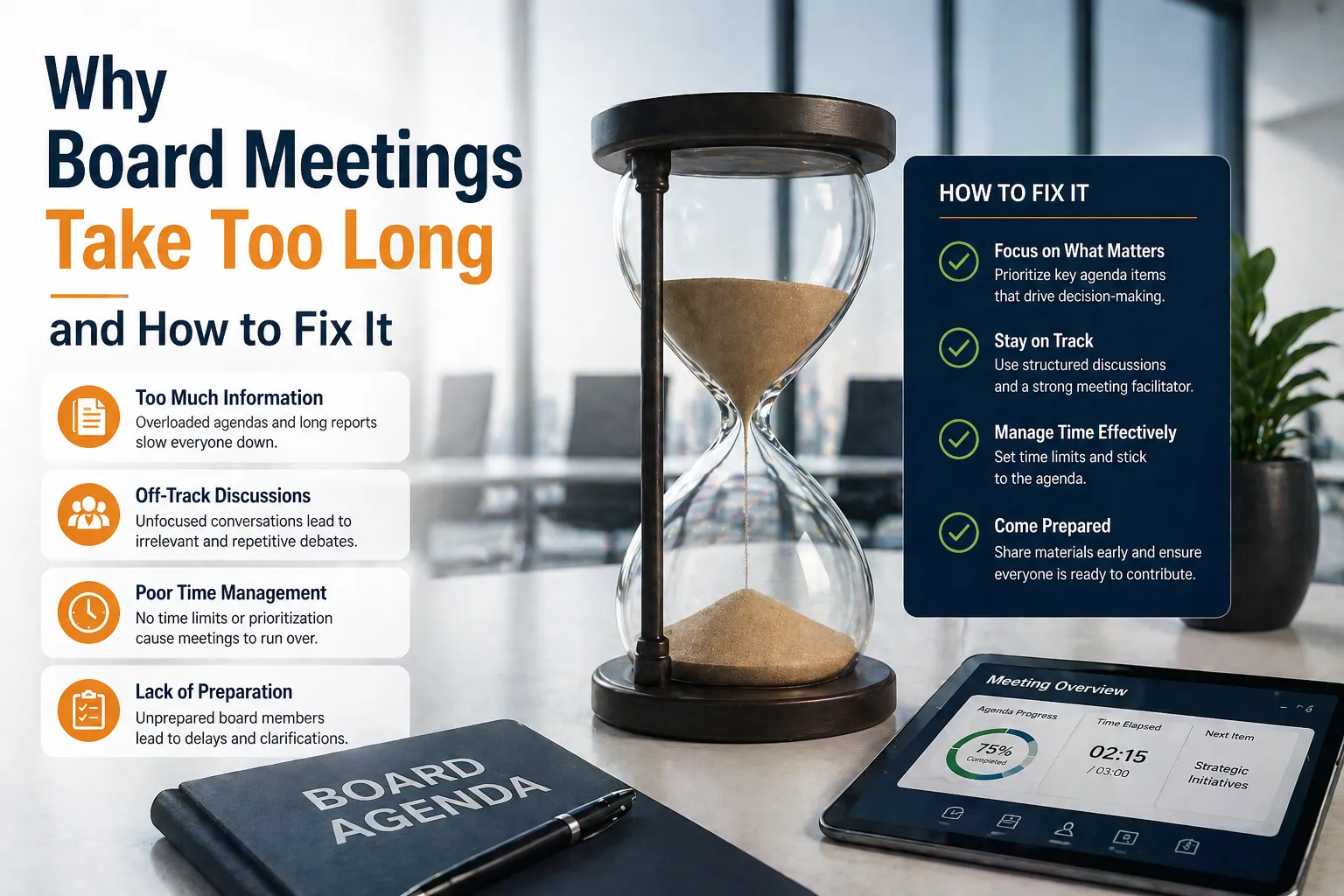
One of the most significant causes of long board meetings is poor preparation. When board members are not adequately prepared, meetings become information-sharing sessions rather than decision-making forums.
Another major factor is agenda overload. Many boards attempt to cover too many topics in a single meeting. This leads to rushed discussions on important issues and excessive time spent on less critical items.
Lack of clear objectives also contributes to inefficiency. Without defined outcomes, discussions can drift without reaching conclusions.
Communication inefficiencies further exacerbate the problem. When information is scattered across emails, documents, and presentations, board members spend time searching for context instead of focusing on analysis.
How Inefficient Meetings Impact Board Productivity and Decision-Making
Long meetings are not just inconvenient. They have a measurable impact on board performance. Extended discussions reduce focus and energy, making it harder for board members to engage effectively.
Decision-making suffers because fatigue leads to rushed conclusions or delayed decisions. Important issues may be postponed simply because there is not enough time left in the meeting.
Inefficiency also affects organizational performance. When boards take longer to make decisions, it slows down execution across the organization.
Research consistently shows that high-performing boards are able to make decisions faster and with greater clarity. Inefficient meetings create the opposite effect.
Why Traditional Meeting Structures No Longer Work
Traditional board meeting structures were designed for a different era. Meetings were less frequent, data was limited, and decision-making cycles were slower.
Today, boards operate in dynamic environments where real-time information and rapid decisions are essential. Traditional structures cannot support these requirements.
For example, static agendas do not allow flexibility for emerging issues. Long presentations consume valuable time without adding strategic value.
Modern boards require more agile meeting structures that prioritize discussion and decision-making over information delivery.
The Role of Technology in Reducing Meeting Duration
Technology plays a critical role in improving board meeting efficiency. Board management software and board portals provide centralized access to information, reducing the time spent searching for documents.
These tools enable pre-meeting collaboration, allowing board members to review materials and provide input before the meeting begins. This shifts the focus of meetings from information sharing to decision-making.
Automation also reduces administrative tasks such as agenda creation and document distribution.
Organizations using modern governance tools often report shorter, more focused meetings.
Practical Strategies to Shorten Board Meetings Without Losing Value
Improving meeting efficiency requires a structured approach. The first step is to prioritize agenda items. Only topics that require board-level discussion should be included.
Preparation must be improved. Board members should receive materials well in advance and be expected to review them before the meeting.
Time limits for discussions can help keep conversations focused. Each agenda item should have a defined objective and expected outcome.
Encouraging concise communication is also important. Board members should focus on key points rather than lengthy explanations.
Finally, post-meeting follow-ups should be streamlined to ensure that decisions are implemented quickly.
How High-Performing Boards Run Efficient Meetings
High-performing boards approach meetings differently. They treat meetings as decision-making platforms rather than information sessions.
They use digital tools to ensure that all information is accessible and up to date. They also focus on strategic discussions rather than operational details.
These boards continuously evaluate their meeting processes and make improvements based on feedback.
Frequently Asked Questions
Why do board meetings take too long
Because of poor preparation, overloaded agendas, and inefficient communication.
How can board meetings be shortened
By improving preparation, prioritizing agenda items, and using digital tools.
What is the biggest cause of inefficiency
Lack of clear objectives and structured discussions.
Final Insight
Board meetings should drive decisions, not consume time. Organizations that optimize meeting structure and adopt modern tools can significantly improve efficiency and governance outcomes.
Share this article on