
 English
  Arabic
Why Board Effectiveness Depends on Preparation, Not Meeting Time
Many boards judge effectiveness by what happens during the meeting. Yet the real determinant of success is preparation. When directors […]
Many boards judge effectiveness by what happens during the meeting. Yet the real determinant of success is preparation. When directors […]

Board agendas are often packed with updates, reports, and discussions. Everything feels important, yet not everything deserves equal attention. When

Board meetings often end with a sense of clarity. Decisions are made, action items are discussed, and everyone leaves the

Introduction Board decisions don’t fail at the moment they’re made. They fail weeks later, when clarity fades, and interpretations differ.

Boards often credit strong outcomes to experienced directors and confident leadership. While people matter, confidence at the board level depends

Many boards rely on informal processes built on experience and trust. While this can work for a time, it becomes
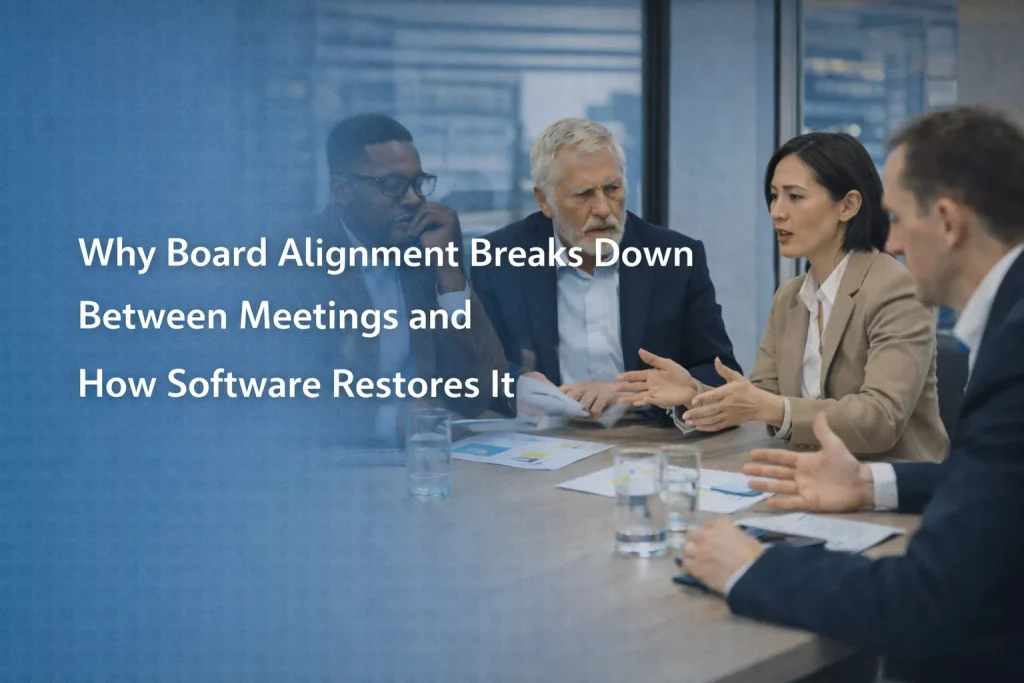
Board meetings often feel aligned in the moment. Directors agree on priorities, executives understand expectations, and everyone leaves with a

Ambiguity weakens governance. When roles, decisions, and expectations are unclear, boards lose effectiveness. Meetings feel polite but unproductive. Risks go

Many boards feel stuck discussing the same issues repeatedly. The agenda looks familiar. The concerns sound the same. Progress feels

Boards are expected to make high-impact decisions under pressure. Financial performance, risk exposure, leadership changes, and long-term strategy all compete