 English
  Arabic
How Insurance Companies Can Improve Board Meeting Management
An insurance board meeting is rarely an isolated administrative event. Before directors meet, Company Secretaries and governance teams may collect […]
An insurance board meeting is rarely an isolated administrative event. Before directors meet, Company Secretaries and governance teams may collect […]
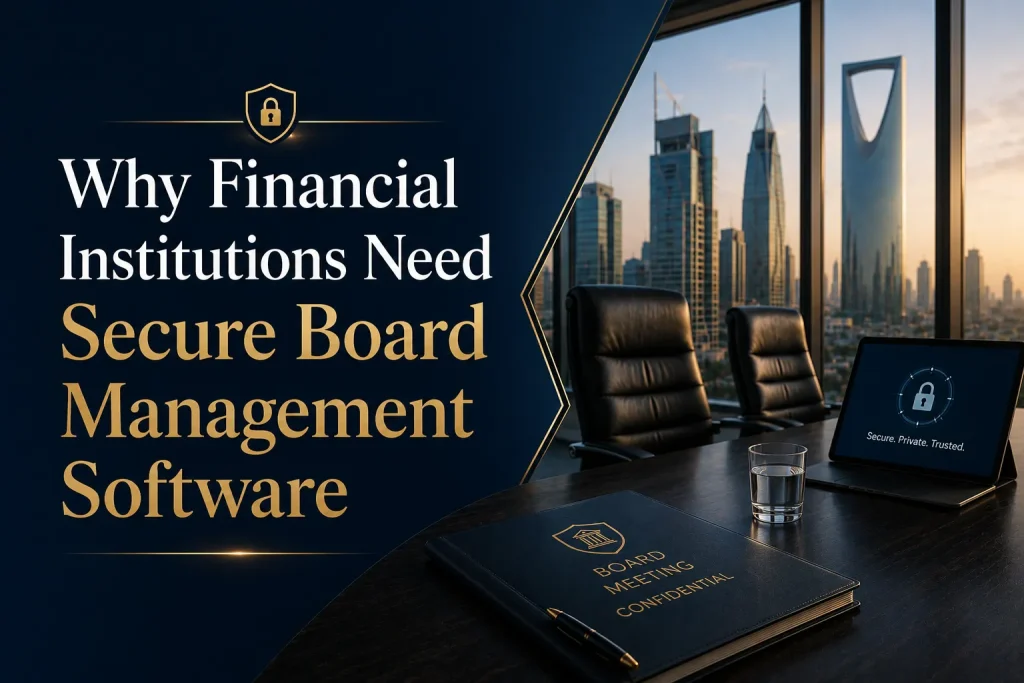
Board and committee materials within financial institutions can contain confidential strategic, financial, operational, organizational, and other sensitive information. That information

Board administration in a bank can involve a dense schedule of recurring governance activity. A main board may operate alongside

Directors can receive a considerable amount of information around a single board meeting. Agendas may arrive alongside board papers, revised

An organization can use digital tools throughout board administration without having a truly digital board meeting process. An agenda might

A board’s work is continuous. One meeting may close with decisions and assigned actions while preparations for the next meeting

For a Company Secretary, preparing for a board meeting can involve coordinating dozens of connected activities. Papers must be collected

Board management does not begin when directors enter a meeting, nor does it end when the meeting closes. Company Secretaries,

For many Pakistani organizations, the difficulty of running a board meeting starts well before directors enter the boardroom. Company Secretaries

Why Governance Challenges Continue to Hold Organizations Back Governance challenges are not new, but they are becoming more complex and