 English
  Arabic
Why Security Is Directly Linked to Decision Quality Decision-making at the board level depends on accurate and reliable information. When security is weak, the integrity of this information is compromised. Board members rely on data to evaluate risks and opportunities. If this data is not secure, decisions may be based on incomplete or incorrect information. Management expert W. Edwards Deming emphasized data quality: “Without data, you’re just another person with an opinion.” Insecure systems undermine the reliability of data, which weakens decision-making. How Security Failures Create Uncertainty in Boardrooms Security failures introduce uncertainty into the decision-making process. When data is...

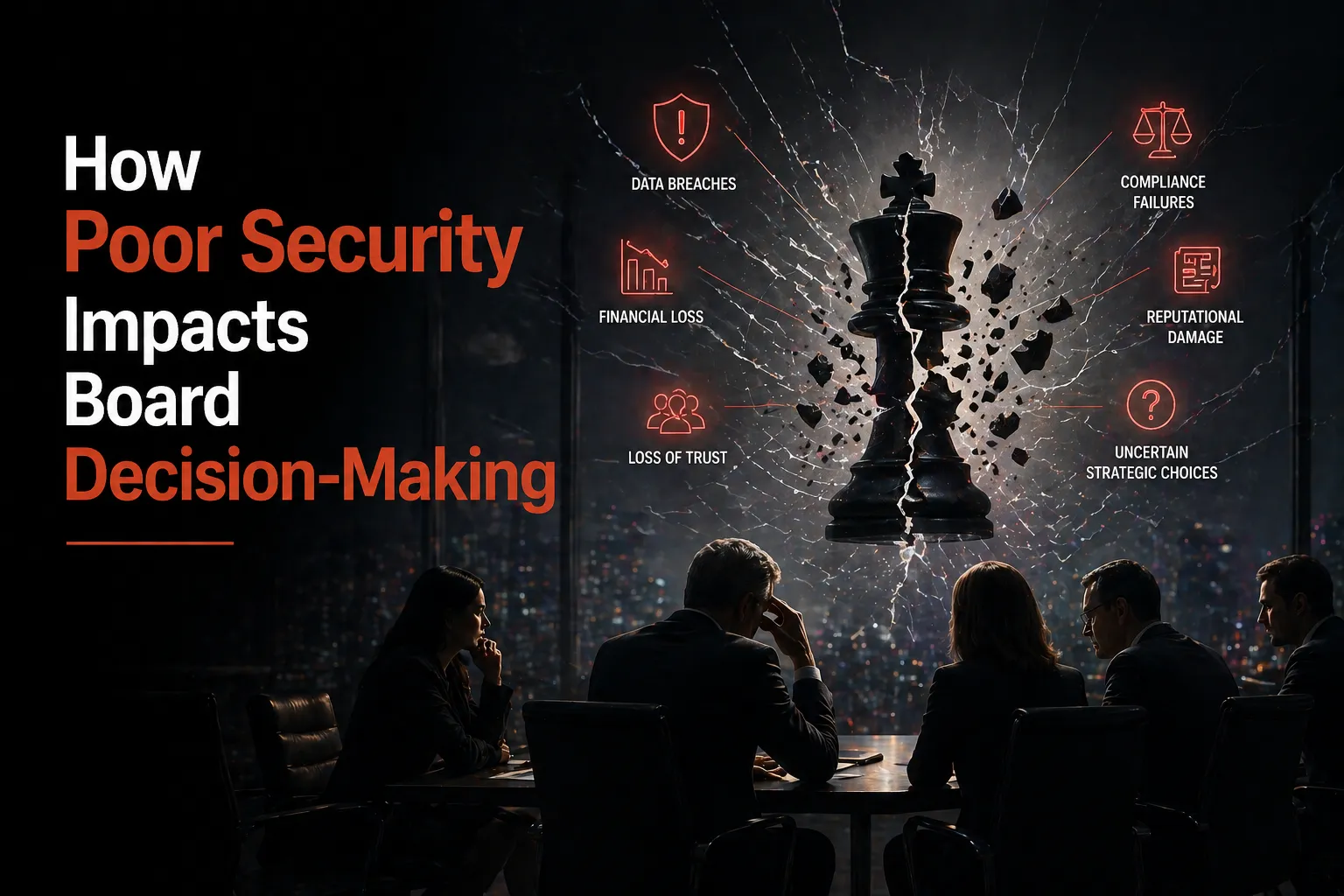
Why Security Is Directly Linked to Decision Quality
Decision-making at the board level depends on accurate and reliable information. When security is weak, the integrity of this information is compromised.
Board members rely on data to evaluate risks and opportunities. If this data is not secure, decisions may be based on incomplete or incorrect information.
Management expert W. Edwards Deming emphasized data quality:
“Without data, you’re just another person with an opinion.”
Insecure systems undermine the reliability of data, which weakens decision-making.
How Security Failures Create Uncertainty in Boardrooms
Security failures introduce uncertainty into the decision-making process. When data is compromised or suspected to be unreliable, board members may hesitate to act.
This hesitation leads to delays and missed opportunities. It also increases the risk of making incorrect decisions.
Uncertainty reduces confidence, which is essential for effective governance.
The Relationship Between Trust and Secure Systems
Trust is a critical component of boardroom dynamics. Secure systems help build trust by ensuring that information is accurate and protected.
When security is weak, trust begins to erode. Board members may question the validity of information and the effectiveness of processes.
This affects collaboration and reduces overall efficiency.
Why Insecure Systems Lead to Poor Decisions
Insecure systems create multiple points of failure. Data may be altered, accessed without authorization, or lost.
These issues make it difficult to rely on information. As a result, decisions may be delayed or based on incorrect assumptions.
What Organizations Must Do to Improve Decision-Making Through Security
Improving security requires a structured approach. Organizations must implement systems that ensure data integrity and protect sensitive information.
Clear policies and procedures help maintain consistency. Training ensures that all board members understand their responsibilities.
Frequently Asked Questions
How does poor security affect decisions
It reduces data reliability and increases uncertainty.
What is the biggest risk of insecure systems
Making decisions based on incorrect information.
How can security improve governance
By ensuring data accuracy and building trust.
Final Perspective
Security is not just a technical requirement. It is a critical factor in effective decision-making. Organizations that prioritize security can make better, more confident decisions.
Share this article on