 English
  Arabic
Why Boardrooms Have Become High-Value Targets for Data Breaches Boardrooms have evolved into one of the most attractive targets for cybercriminals. The reason is straightforward: the information handled at this level has immediate strategic and financial value. Decisions related to mergers, acquisitions, executive leadership, and long-term planning are all discussed in this environment. Unlike operational systems that are heavily monitored and protected, board-level communication often relies on less structured tools. This creates a gap that attackers are quick to exploit. Many organizations assume that existing security measures are sufficient, but attackers focus specifically on areas where oversight is limited. Cybersecurity...

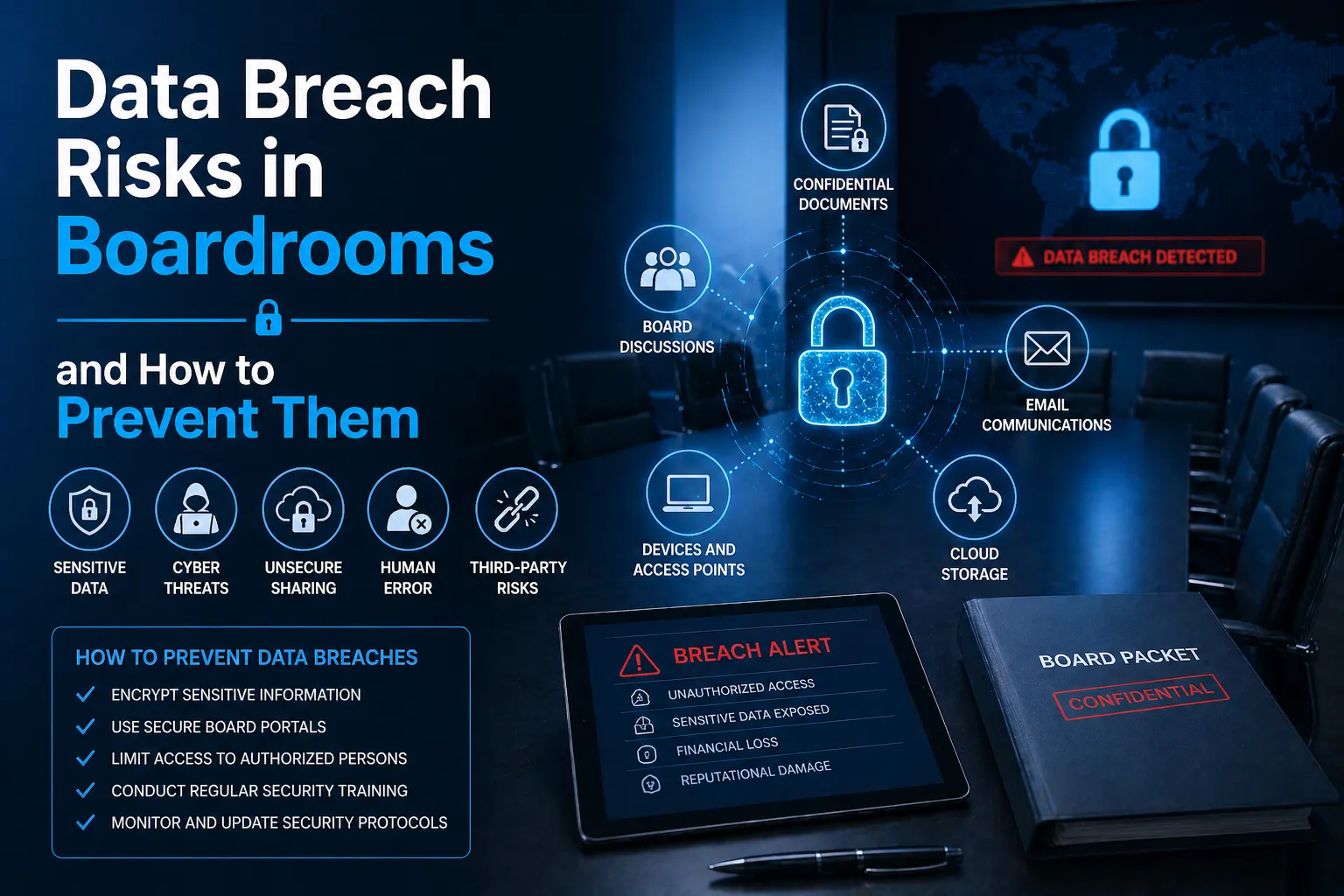
Why Boardrooms Have Become High-Value Targets for Data Breaches
Boardrooms have evolved into one of the most attractive targets for cybercriminals. The reason is straightforward: the information handled at this level has immediate strategic and financial value. Decisions related to mergers, acquisitions, executive leadership, and long-term planning are all discussed in this environment.
Unlike operational systems that are heavily monitored and protected, board-level communication often relies on less structured tools. This creates a gap that attackers are quick to exploit. Many organizations assume that existing security measures are sufficient, but attackers focus specifically on areas where oversight is limited.
Cybersecurity leader Satya Nadella emphasized the importance of trust in digital systems:
“Trust is at the core of every successful organization.”
When boardroom data is compromised, that trust is immediately put at risk.
The Entry Points Attackers Use to Access Board-Level Data
Data breaches rarely occur through a single large vulnerability. Instead, they begin with small weaknesses that go unnoticed. One of the most common entry points is unsecured communication channels such as email or messaging platforms.
Another critical vulnerability is weak authentication practices. Board members often use simple passwords or reuse credentials, making it easier for attackers to gain access. Once inside, attackers can move laterally across systems.
Unsecured devices also play a major role. Personal laptops and mobile devices used to access board materials may lack proper security controls. If these devices are compromised, sensitive data becomes exposed.
Third-party integrations and shared tools can introduce additional risks, especially when they are not properly monitored.
The Real Consequences of a Boardroom Data Breach
The impact of a data breach at the board level is far-reaching. One of the most immediate consequences is reputational damage. Stakeholders expect organizations to protect sensitive information, and a breach undermines that expectation.
Financial consequences are also significant. Organizations may face regulatory fines, legal action, and the cost of remediation. These costs can escalate quickly, especially if the breach involves critical data.
Technology investor Marc Andreessen once observed:
“Software is eating the world.”
As organizations become more digital, the impact of breaches grows exponentially.
Another major consequence is loss of competitive advantage. Strategic information falling into the wrong hands can disrupt business plans and benefit competitors.
Why Traditional Security Measures Are No Longer Enough
Traditional security approaches focus on perimeter defense, such as firewalls and antivirus systems. While these measures are necessary, they do not address the unique challenges of board-level communication.
One major limitation is lack of visibility. Organizations often do not have clear insight into how board-level data is accessed or shared. This makes it difficult to detect unauthorized activity.
Another issue is reactive security. Traditional systems respond to threats after they occur, rather than preventing them.
Modern threats require proactive strategies that combine technology, process, and user awareness.
Strategies That Effectively Prevent Boardroom Breaches
Preventing data breaches requires a multi-layered approach. One of the most effective strategies is implementing secure board communication platforms that centralize data and provide controlled access.
Strong authentication measures such as multi-factor authentication significantly reduce the risk of unauthorized access. This adds an additional layer of protection beyond passwords.
Regular training for board members is essential. Awareness helps prevent common mistakes such as clicking on malicious links or sharing sensitive information through unsecured channels.
Continuous monitoring and regular audits ensure that vulnerabilities are identified and addressed promptly.
How Security-Mature Boards Stay Ahead of Threats
Organizations with strong security practices treat data protection as a strategic priority. They invest in systems that provide both security and visibility.
They also establish clear policies for data access and sharing, ensuring consistency across all board members.
These boards continuously adapt to evolving threats, recognizing that security is an ongoing process rather than a one-time solution.
Frequently Asked Questions
What causes data breaches in boardrooms
Unsecured communication, weak authentication, and vulnerable devices.
How can organizations prevent breaches
By using secure platforms, strong authentication, and regular training.
Why are boardrooms targeted
Because they handle high-value strategic and financial information.
Final Insight
Boardroom data breaches are preventable when organizations take a proactive approach. The key is recognizing vulnerabilities before they are exploited.
Share this article on