 English
  Arabic
Why Board Management Software Implementation Fails at the Process Level, Not the Technology Level Most organizations assume that implementing board management software is a technology upgrade. In reality, it is a process transformation. The biggest failures occur not because the software lacks capability, but because existing governance processes are not aligned with it. Boards operate through structured workflows such as agenda planning, document sharing, meeting execution, and decision tracking. When these workflows are not redesigned around the software, the system becomes an add-on rather than a replacement. This leads to duplication of effort. Documents exist both inside and outside the...

Why Board Management Software Implementation Fails at the Process Level, Not the Technology Level
Most organizations assume that implementing board management software is a technology upgrade. In reality, it is a process transformation. The biggest failures occur not because the software lacks capability, but because existing governance processes are not aligned with it.
Boards operate through structured workflows such as agenda planning, document sharing, meeting execution, and decision tracking. When these workflows are not redesigned around the software, the system becomes an add-on rather than a replacement.
This leads to duplication of effort. Documents exist both inside and outside the platform. Communication happens across email and the board portal. Instead of simplifying governance, the system adds another layer of complexity.
MIT research on digital transformation highlights that organizations focusing only on tools are significantly less successful than those redesigning processes alongside technology.
The Most Critical Implementation Breakpoints Organizations Overlook
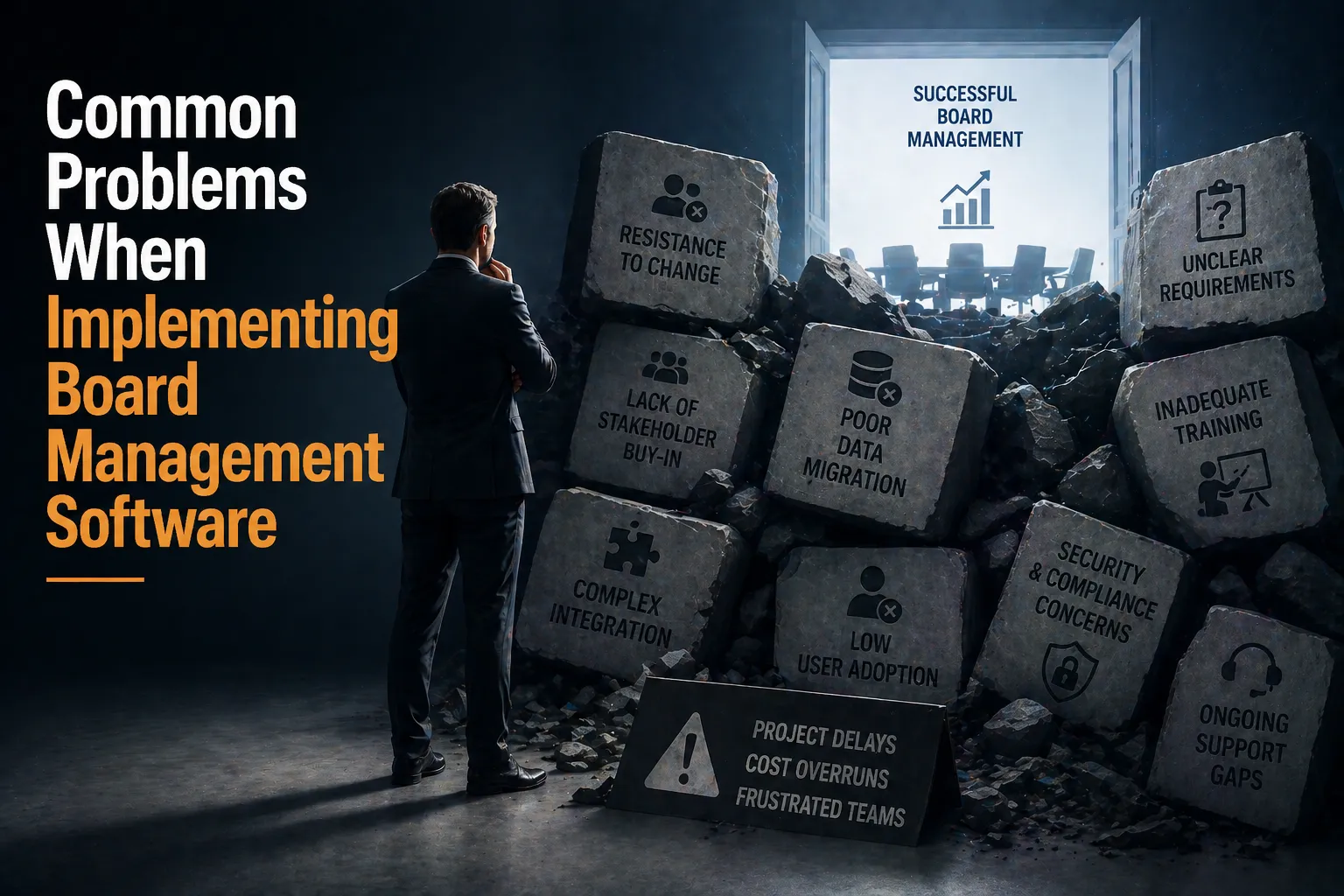
There are specific points where implementation typically breaks down. One of the earliest is requirement misalignment. Organizations often choose software based on features rather than actual governance needs.
Another major breakpoint is workflow mismatch. If the platform does not reflect how the board operates, users struggle to integrate it into their routine.
A third issue is data migration failure. Moving historical documents and records into the system is often handled poorly, leading to incomplete archives and reduced trust in the platform.
Finally, lack of ownership becomes a problem. Without a clear internal champion driving adoption, implementation loses momentum.
How Poor Implementation Creates Long-Term Governance Inefficiencies
When implementation is flawed, the impact extends far beyond the initial rollout. Boards end up operating in hybrid environments where digital and manual processes coexist.
This creates confusion about where information resides. Board members may rely on outdated documents or miss critical updates. Decision-making slows down because time is spent validating information rather than analyzing it.
Administrative teams bear the burden of managing multiple systems. Instead of reducing workload, the software increases it.
Why Board Member Behavior Determines Implementation Success
Technology adoption in the boardroom is driven by behavior, not features. Board members are typically senior professionals with established habits. Changing these habits requires more than introducing a new system.
If the platform does not deliver immediate value, users revert to familiar tools. This creates inconsistent adoption, where some members use the system while others avoid it.
Time constraints amplify this issue. Board members prioritize efficiency, and any tool that slows them down, even temporarily, is quickly rejected.
What High-Performing Organizations Do to Ensure Success
Organizations that succeed in implementing board portals follow a structured approach. They begin by mapping existing workflows and identifying inefficiencies.
They then redesign these workflows to align with the capabilities of the software. This ensures that the platform becomes the primary system rather than an additional tool.
Training is tailored to board members, focusing on practical use cases rather than technical features. Leadership plays an active role in adoption, setting expectations for usage.
Proven Strategies to Maximize ROI from Board Software
To achieve full ROI, organizations must:
- Centralize all board activities within the platform
- Eliminate parallel workflows
- Provide continuous training and support
- Monitor adoption metrics and address gaps
- Align the software with governance objectives
These strategies ensure that the software delivers measurable improvements in efficiency and decision-making.
Frequently Asked Questions
Why do board management software implementations fail
Because processes are not aligned with the technology.
What is the biggest implementation mistake
Treating it as a technical upgrade instead of a governance transformation.
How can ROI be improved
By ensuring full adoption and eliminating parallel workflows.
Final Insight
Board management software succeeds only when organizations transform how boards operate. Without process alignment, even the best tools fail to deliver value.
Share this article on