 English
  Arabic
Why Board Portal Adoption Fails Despite Strong Technology Many organizations invest in a board portal expecting immediate improvements in governance efficiency, secure communication, and faster decision-making. However, adoption often falls short of expectations, not because of the technology, but because of how it is introduced and used. Board portal adoption is not simply a technical rollout. It is a behavioral shift that requires board members to change how they access documents, collaborate, and participate in meetings. Without proper alignment between technology and user behavior, adoption remains superficial. Organizations that fail to recognize this distinction often experience low engagement, inconsistent usage,...

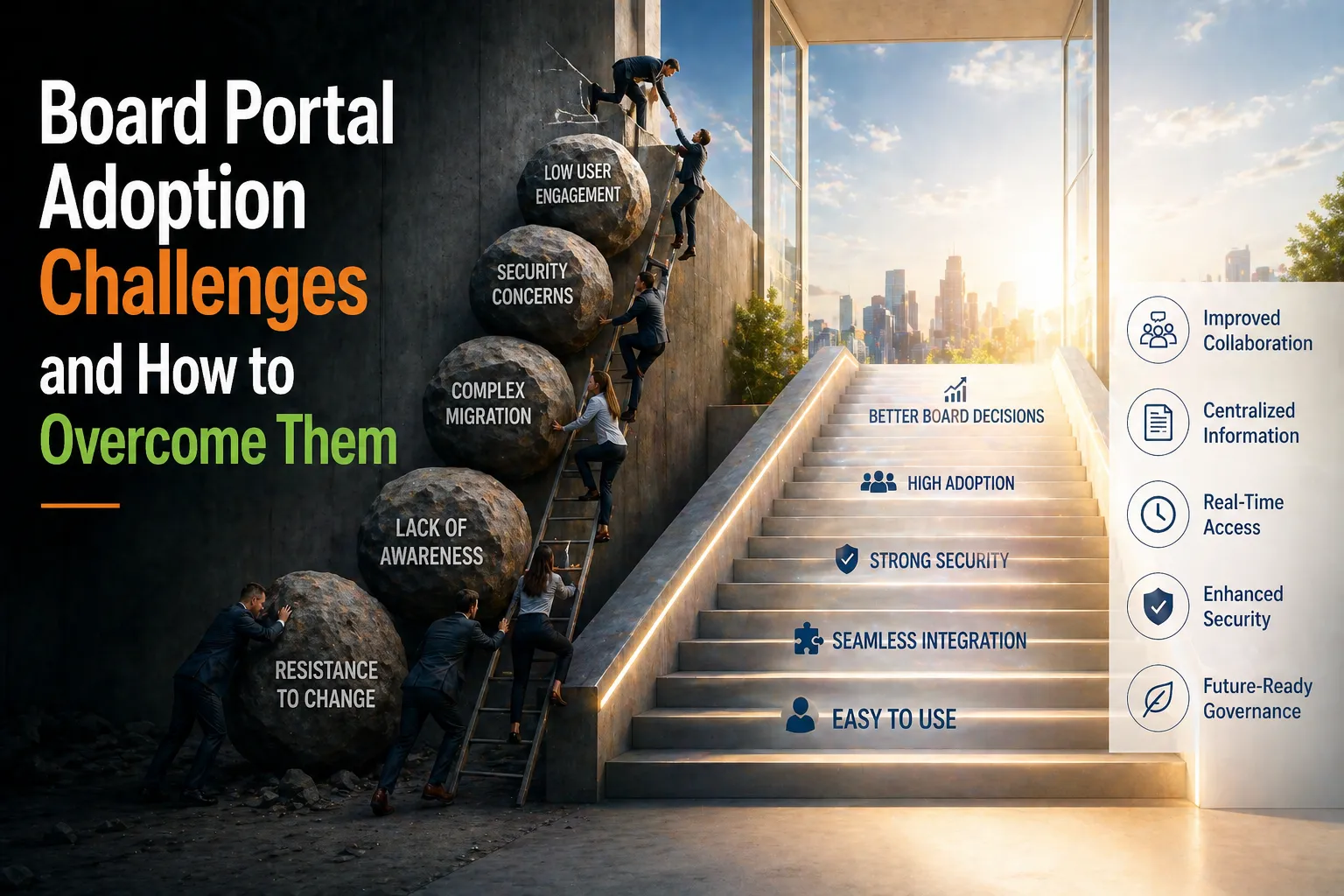
Why Board Portal Adoption Fails Despite Strong Technology
Many organizations invest in a board portal expecting immediate improvements in governance efficiency, secure communication, and faster decision-making. However, adoption often falls short of expectations, not because of the technology, but because of how it is introduced and used.
Board portal adoption is not simply a technical rollout. It is a behavioral shift that requires board members to change how they access documents, collaborate, and participate in meetings. Without proper alignment between technology and user behavior, adoption remains superficial.
Organizations that fail to recognize this distinction often experience low engagement, inconsistent usage, and continued reliance on email or paper-based processes. As a result, the board portal becomes an underutilized tool rather than a central governance platform.
Technology analyst Benedict Evans once said:
“Technology adoption is not about the tool, it is about the workflow it replaces.”
This insight explains why many board portals fail to deliver value.
The Hidden Friction Points That Slow Down Adoption
Adoption challenges are often subtle but impactful. One of the most common friction points is user interface complexity. Board members expect simplicity, and when a platform feels unintuitive, they quickly disengage.
Another major issue is inconsistent usage across the board. Some members adopt the platform fully, while others continue using traditional methods. This creates a fragmented environment where information is split across multiple channels.
Lack of integration with existing systems also contributes to friction. If the board portal does not align with compliance tools, document systems, or reporting workflows, it creates additional steps rather than simplifying processes.
These friction points collectively reduce adoption speed and limit the effectiveness of the platform.
Why Partial Adoption Is Worse Than No Adoption
Partial adoption creates a hybrid environment that combines the inefficiencies of both digital and traditional systems. Board members may use the portal for some tasks while relying on email or printed documents for others.
This leads to duplication of work, increased administrative burden, and confusion about where the latest information is stored. Instead of improving governance, it introduces new inefficiencies.
McKinsey research highlights that incomplete digital adoption can reduce expected ROI by more than 50 percent, making it a critical issue for organizations to address.
The Role of Leadership in Driving Adoption Success
Leadership plays a decisive role in the success of board portal adoption. When board chairs and senior executives actively use and promote the platform, it signals its importance to all members.
Conversely, when leadership does not fully commit, adoption becomes optional rather than mandatory. This leads to inconsistent usage and reduced effectiveness.
Strong leadership ensures that the board portal becomes the primary system for communication, document management, and decision tracking. This consistency is essential for achieving full adoption.
How to Remove Resistance and Improve User Engagement
Resistance to board portal adoption is often rooted in familiarity with existing processes. Board members may feel comfortable using email or printed materials and see no immediate need for change.
To overcome this resistance, organizations must clearly communicate the benefits of the platform. These benefits include improved security, faster access to information, and streamlined workflows.
Providing hands-on training is equally important. Board members should be guided through real use cases, showing how the platform simplifies their tasks.
Creating a user-friendly experience is critical. The platform should be intuitive, accessible, and aligned with board members’ expectations.
Proven Strategies That Ensure Full Adoption
Successful adoption requires a structured approach. Organizations should begin with a phased rollout, allowing board members to gradually transition to the new system.
Standardizing workflows is essential. All board-related activities, including document sharing, communication, and meeting management, should be centralized within the platform.
Continuous support and feedback loops help address issues and improve user experience. Organizations should regularly evaluate adoption levels and make adjustments as needed.
Frequently Asked Questions
Why do board portal adoptions fail
Due to poor onboarding, resistance to change, and lack of leadership support.
What is the biggest challenge in adoption
Achieving consistent usage across all board members.
How can adoption be improved
Through training, leadership involvement, and workflow standardization.
Final Insight
Board portal adoption is not a technology challenge. It is a change management challenge. Organizations that address both achieve higher efficiency and stronger governance outcomes.
Share this article on