
 English
  Arabic
Board meetings often feel aligned in the moment. Directors agree on priorities, executives understand expectations, and everyone leaves with a shared sense of direction. Yet between meetings, alignment slowly weakens. Questions arise. Interpretations differ. Small gaps grow into larger misunderstandings. This breakdown is rarely caused by disagreement. It usually happens because alignment is not actively maintained. Strong board meeting management helps preserve clarity long after the meeting ends. Why Board Alignment Breaks Down Between Meetings and How Software Restores It On this page Why alignment fades after meetings How misalignment quietly affects execution The role of board meeting management software...

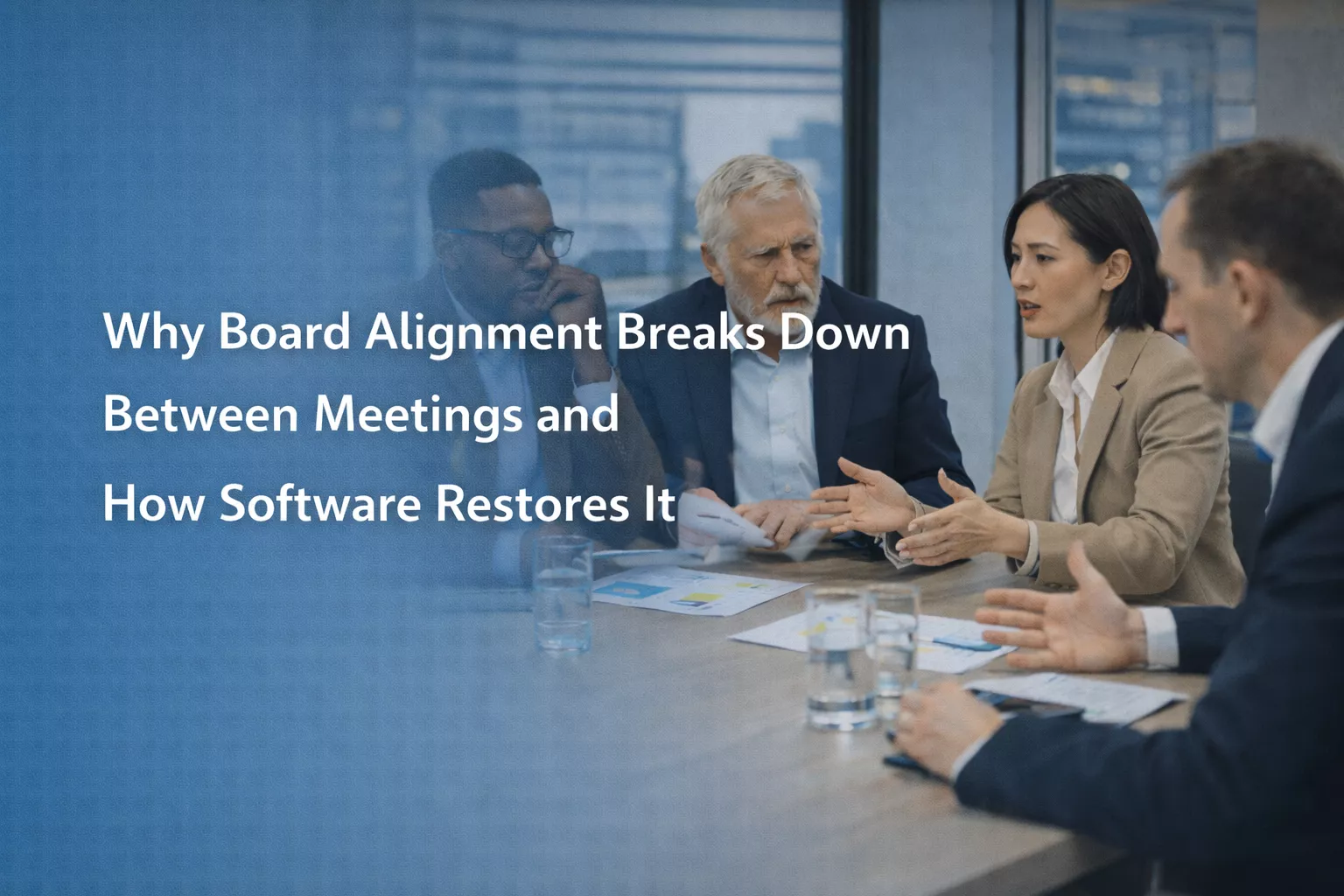
Board meetings often feel aligned in the moment. Directors agree on priorities, executives understand expectations, and everyone leaves with a shared sense of direction. Yet between meetings, alignment slowly weakens. Questions arise. Interpretations differ. Small gaps grow into larger misunderstandings.
This breakdown is rarely caused by disagreement. It usually happens because alignment is not actively maintained. Strong board meeting management helps preserve clarity long after the meeting ends.
Why Board Alignment Breaks Down Between Meetings and How Software Restores It
On this page
- Why alignment fades after meetings
- How misalignment quietly affects execution
- The role of board meeting management software in maintaining clarity
- Practical ways to keep boards aligned
- Conclusion: alignment is an ongoing process
Why alignment fades after meetings
Alignment fades when communication becomes fragmented. Directors rely on memory. Executives interpret guidance differently. Follow-ups happen in isolated conversations rather than through a shared process.
Over time, these small differences create confusion. Teams move in slightly different directions, and the board is surprised by outcomes that were never intended.
Effective board meeting management reduces this risk by preserving shared understanding beyond the meeting room.
How misalignment quietly affects execution
Misalignment does not always lead to immediate failure. Instead, it shows up as:
- Delayed decisions
- Reopened discussions
- Missed expectations
- Tension between board and management
These issues drain time and trust. A Board Meeting Management Solution helps prevent this by creating a single reference point for decisions and priorities.
The role of board meeting management software in maintaining clarity
board meeting management software centralizes decisions, actions, and context. A Board Management Portal allows directors and executives to revisit what was agreed, why it was agreed, and what progress looks like.
This reduces interpretation gaps. Everyone works from the same information, not from individual notes or assumptions.
Practical ways to keep boards aligned
Boards can improve alignment by:
- Recording decision intent, not just outcomes
- Reviewing progress against decisions, not against updates
- Keeping strategic priorities visible between meetings
- Using one system for communication and documentation
Supported by Board Management Software, these practices become consistent.
Conclusion: alignment is an ongoing process
Alignment is not achieved once per meeting. It must be sustained. Diskus supports board meeting management by preserving clarity and shared understanding across meetings.
Share this article on


