 English
  Arabic
Why Many Organizations Delay Adopting Board Management Software Most organizations do not immediately realize they need board management software. Governance inefficiencies tend to develop gradually, making them difficult to detect early. Boards often continue using traditional tools such as email, spreadsheets, and shared drives because they are familiar. These tools appear sufficient on the surface, but they are not designed for complex governance workflows. Over time, these outdated systems create friction. Communication becomes fragmented, documents are difficult to manage, and decision-making slows down. However, because these issues develop slowly, organizations often normalize them. This delay in recognizing the need for...

Why Many Organizations Delay Adopting Board Management Software
Most organizations do not immediately realize they need board management software. Governance inefficiencies tend to develop gradually, making them difficult to detect early.
Boards often continue using traditional tools such as email, spreadsheets, and shared drives because they are familiar. These tools appear sufficient on the surface, but they are not designed for complex governance workflows.
Over time, these outdated systems create friction. Communication becomes fragmented, documents are difficult to manage, and decision-making slows down. However, because these issues develop slowly, organizations often normalize them.
This delay in recognizing the need for change can be costly. By the time inefficiencies become obvious, they may already be impacting performance, security, and decision quality.
Technology strategist Marc Andreessen once said:
“Software is eating the world.”
In governance, this means organizations that fail to adopt digital solutions fall behind those that do.
Key Warning Signs Your Board Processes Are No Longer Effective
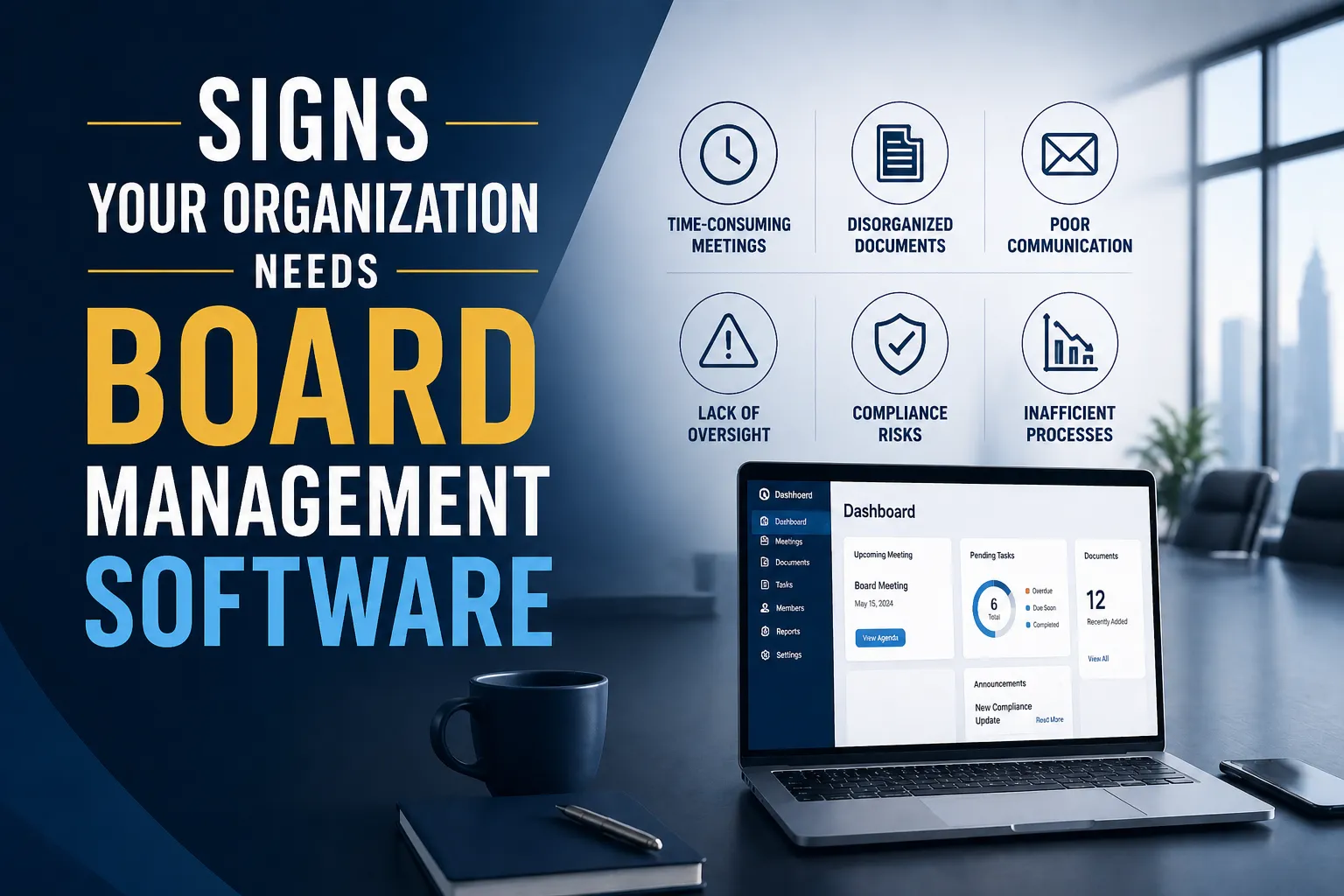
One of the clearest indicators that an organization needs a board portal is recurring inefficiency in board operations.
If meetings frequently run longer than expected, it often signals deeper issues in preparation, communication, and structure. Similarly, if board members struggle to find or access documents, it reflects poor information management.
Another warning sign is repeated discussions without clear outcomes. This suggests that decision-making processes are not functioning effectively.
Administrative overload is also a strong indicator. When teams spend excessive time preparing board packs, distributing documents, and managing updates, it reduces productivity.
Organizations experiencing these challenges are often already operating below optimal efficiency.
How Communication Breakdowns Signal the Need for Digital Tools
Communication is a critical component of governance. When communication is fragmented across emails, messaging apps, and documents, it becomes difficult to maintain alignment.
Board members may miss important updates or rely on outdated information. This leads to confusion and delays in decision-making.
Lack of centralized communication also makes it difficult to track discussions and decisions. This reduces transparency and accountability.
Organizations that struggle with communication often benefit significantly from centralized governance platforms.
Why Security Risks Indicate an Urgent Need for Board Software
Security is one of the most important factors in board governance. Board-level data includes sensitive information such as financial reports, strategic plans, and legal documents.
Using email or unsecured systems to share this information increases the risk of data breaches. Even a single security incident can have serious consequences.
If an organization does not have secure document sharing and access control, it is a strong indicator that board management software is needed.
Modern governance tools provide encryption, permission controls, and audit trails to protect sensitive data.
The Hidden Cost of Inefficient Board Processes
Many organizations underestimate the cost of inefficient board processes. While inefficiencies may seem minor individually, they accumulate over time.
Long meetings, delayed decisions, and administrative workload all contribute to productivity loss. At the board level, where time is highly valuable, these costs can be significant.
Inefficiencies also impact strategic execution. When decisions are delayed, opportunities may be missed, and risks may not be addressed in time.
Organizations that identify these hidden costs often recognize the need for digital transformation.
How Board Management Software Solves These Problems
Modern board management software addresses these challenges by centralizing governance processes.
It provides a single platform for document management, communication, and decision tracking. This eliminates fragmentation and improves efficiency.
Automation reduces administrative workload, allowing teams to focus on strategic activities.
Real-time access to information ensures that board members are always working with the latest data.
These improvements lead to faster decision-making, better collaboration, and stronger governance.
When Organizations Typically Make the Switch
Organizations usually adopt board portals at key moments:
- Rapid growth that increases governance complexity
- Regulatory pressure requiring better compliance
- Security concerns related to data sharing
- Persistent inefficiencies in meetings and processes
These triggers highlight the limitations of traditional tools and create urgency for change.
Frequently Asked Questions
What are signs you need board management software
Inefficient meetings, poor communication, and security risks.
When should organizations switch to a board portal
When governance processes become complex or inefficient.
What is the biggest benefit of board software
Improved efficiency, security, and decision-making.
Final Insight
Recognizing the signs early allows organizations to address governance challenges before they escalate. Board management software is not just a tool but a strategic investment in efficiency, security, and performance.
Share this article on