 English
  Arabic
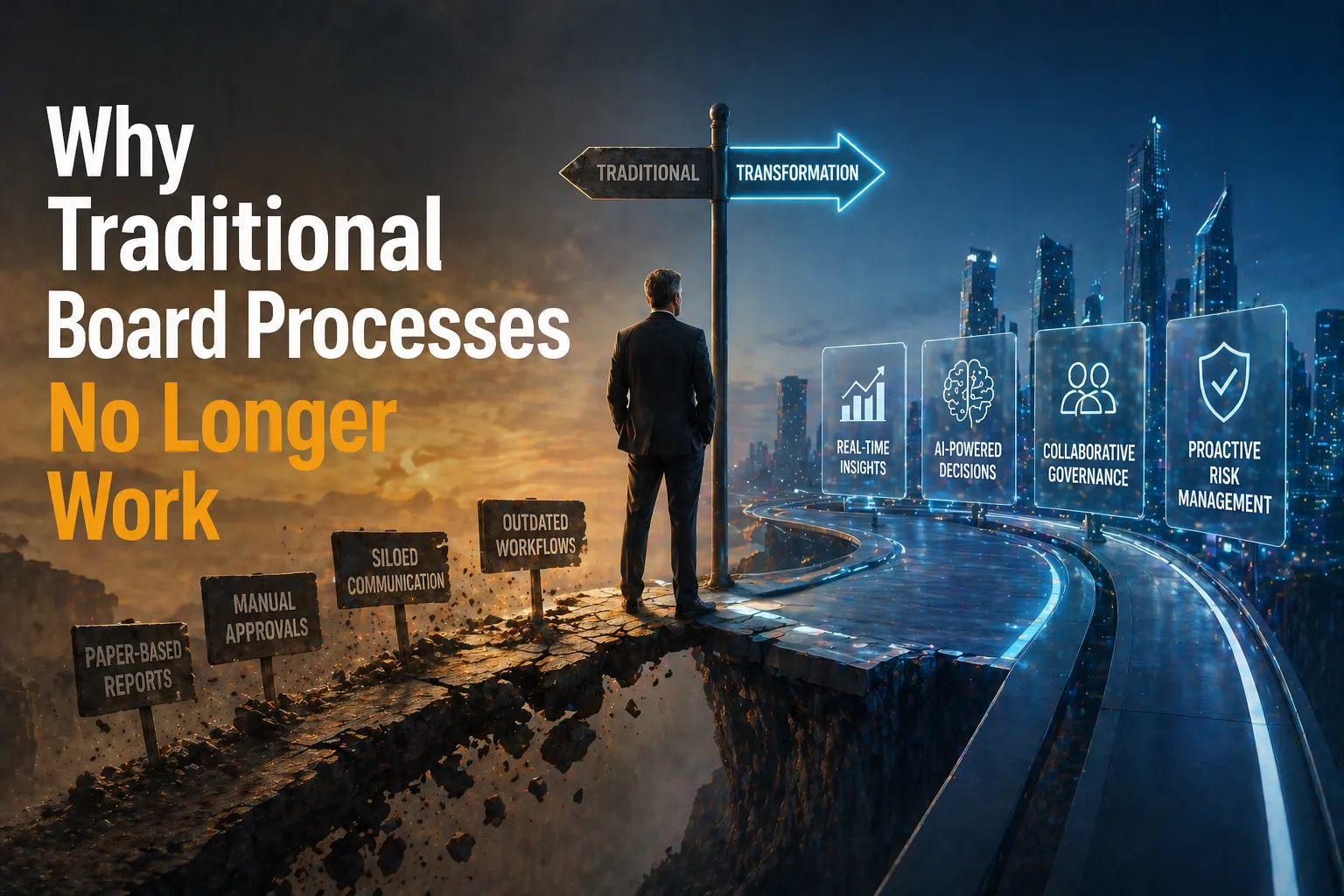
Why Legacy Board Practices Are Breaking Under Modern Pressure Traditional board processes were designed for a slower, more predictable business environment. Meetings were less frequent, data volumes were smaller, and decisions did not require real-time insights. Today, this environment has completely changed. Organizations now operate in fast-moving markets where decisions must be made quickly and accurately. However, many boards continue to rely on outdated methods such as manual document sharing, email communication, and paper-based workflows. These processes cannot keep up with the speed and complexity of modern governance. Technology strategist Erik Brynjolfsson once said: “The key to winning in the...

Why Legacy Board Practices Are Breaking Under Modern Pressure
Traditional board processes were designed for a slower, more predictable business environment. Meetings were less frequent, data volumes were smaller, and decisions did not require real-time insights. Today, this environment has completely changed.
Organizations now operate in fast-moving markets where decisions must be made quickly and accurately. However, many boards continue to rely on outdated methods such as manual document sharing, email communication, and paper-based workflows. These processes cannot keep up with the speed and complexity of modern governance.
Technology strategist Erik Brynjolfsson once said:
“The key to winning in the digital age is not just adopting technology, but adapting your processes to it.”
Boards that fail to adapt their processes struggle to remain effective.
Where Traditional Processes Create Bottlenecks in Governance
The inefficiencies of traditional processes are not always obvious, but they create significant bottlenecks over time. One major issue is delayed access to information. Board members often receive documents late, leaving little time for review.
Another bottleneck is fragmented communication. Information is spread across emails, shared drives, and physical documents, making it difficult to maintain alignment. This fragmentation slows down collaboration and increases the risk of errors.
Manual workflows also create inefficiencies. Tasks such as compiling reports, distributing materials, and tracking updates require significant time and effort. This reduces productivity and shifts focus away from strategic discussions.
How Outdated Methods Affect Decision Quality
Outdated processes directly impact the quality of decisions. When board members do not have access to accurate and timely information, they are forced to rely on incomplete data.
This leads to delays, as additional time is required to gather and verify information. It also increases the risk of making incorrect decisions.
Management expert Peter Drucker emphasized the importance of relevant information:
“The most important contribution management needs to make is to improve the quality of decisions.”
Traditional processes make this goal difficult to achieve.
Why Organizations Continue Using Inefficient Systems
Despite their limitations, many organizations continue to rely on traditional processes. One reason is familiarity. Board members are accustomed to existing workflows and may resist change.
Another reason is perceived complexity. Implementing new systems requires time and effort, which organizations may hesitate to invest.
There is also a lack of awareness about the risks associated with outdated processes. Without recognizing these risks, organizations see no urgency to change.
What Modern Board Processes Look Like
Modern board processes are designed for speed, efficiency, and security. They rely on digital platforms that centralize communication and document management.
These systems provide real-time access to information, allowing board members to stay informed and make decisions quickly. They also reduce administrative workload, enabling boards to focus on strategy.
Automation plays a key role in modern processes. Tasks that were previously manual are now streamlined, improving efficiency and accuracy.
How Organizations Can Transition Successfully
Transitioning to modern processes requires a structured approach. Organizations must first assess their current workflows and identify areas of inefficiency.
Introducing digital tools gradually can help ease the transition. Training board members ensures that they are comfortable with new systems.
Clear communication about the benefits of modernization helps build support and reduces resistance.
Frequently Asked Questions
Why do traditional board processes fail today
Because they cannot keep up with modern speed and complexity.
What are the biggest limitations
Manual workflows, delayed information, and fragmented communication.
How can boards modernize effectively
By adopting digital tools and improving processes.
Final Insight
Traditional board processes are no longer sufficient. Organizations that modernize their governance practices gain a significant advantage in efficiency and decision-making.
Share this article on