 English
  Arabic
Why Hidden Governance Risks Are More Dangerous Than Visible Ones Boards are typically aware of major risks such as financial instability, regulatory compliance, and operational disruptions. However, the most damaging risks are often those that remain hidden or underestimated. These governance risks develop gradually and are frequently overlooked because they do not produce immediate consequences. Unlike visible risks, hidden governance risks are embedded within processes, structures, and decision-making practices. They weaken oversight, reduce accountability, and create vulnerabilities that can escalate over time. The challenge is that boards often focus on measurable risks while ignoring structural weaknesses. This creates blind spots...

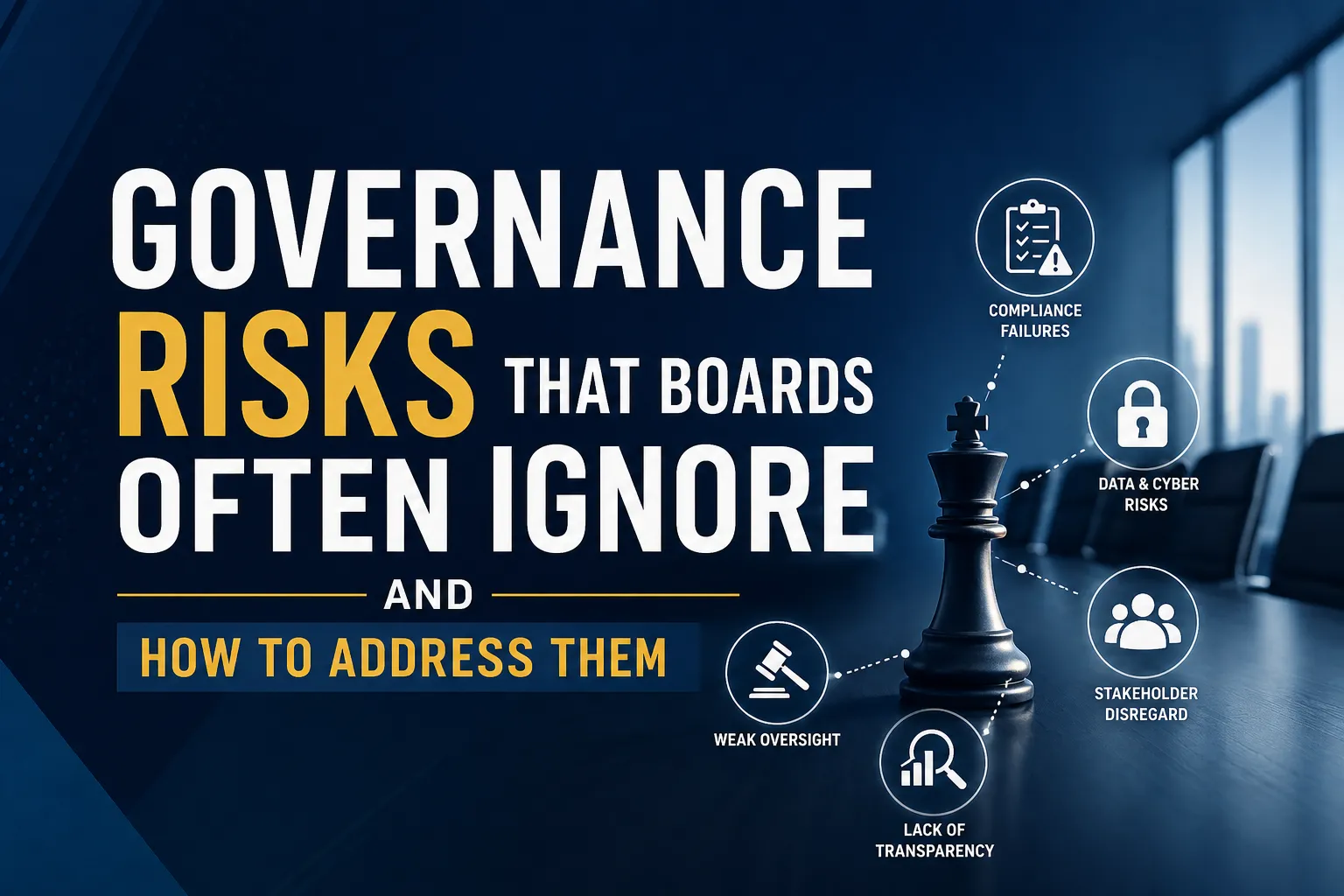
Why Hidden Governance Risks Are More Dangerous Than Visible Ones
Boards are typically aware of major risks such as financial instability, regulatory compliance, and operational disruptions. However, the most damaging risks are often those that remain hidden or underestimated. These governance risks develop gradually and are frequently overlooked because they do not produce immediate consequences.
Unlike visible risks, hidden governance risks are embedded within processes, structures, and decision-making practices. They weaken oversight, reduce accountability, and create vulnerabilities that can escalate over time.
The challenge is that boards often focus on measurable risks while ignoring structural weaknesses. This creates blind spots that limit the effectiveness of governance.
Risk management expert Nassim Nicholas Taleb once stated:
“The biggest risks are those you don’t see.”
In governance, these unseen risks can have significant long-term consequences.
The Most Common Governance Risks Boards Overlook
One of the most common overlooked risks is poor information quality. Boards rely on reports and data to make decisions, but if the information is incomplete or inaccurate, decisions are compromised.
Another critical risk is lack of independent oversight. Boards that are too closely aligned with management may fail to challenge decisions effectively. This reduces objectivity and increases the risk of errors.
Inadequate risk assessment frameworks also pose a significant challenge. Without structured processes, boards may not identify emerging risks in time.
Cultural risks are often ignored as well. Organizational culture influences behavior and decision-making, yet it is rarely measured or monitored systematically.
Organizations focusing on board risk management increasingly recognize that these hidden risks require greater attention.
How Governance Risks Impact Organizational Stability
Governance risks have a direct impact on organizational stability. Poor oversight can lead to strategic misalignment, where decisions do not support long-term objectives.
Inadequate risk management increases exposure to financial and operational disruptions. This can result in losses, compliance failures, and reputational damage.
Lack of accountability further exacerbates these issues. When responsibilities are unclear, problems may go unaddressed.
Over time, these risks weaken the organization’s ability to respond to challenges and adapt to change.
Why Risk Identification Is Often Incomplete
One of the reasons governance risks are overlooked is incomplete risk identification. Boards may rely on traditional risk assessments that focus on known issues.
However, modern organizations face dynamic and evolving risks that require continuous monitoring. Static assessments are not sufficient.
Another issue is reliance on management for risk reporting. While management provides valuable insights, the board must maintain independent oversight.
Limited expertise in emerging areas such as cybersecurity and digital transformation can also hinder risk identification.
Improving risk identification requires a proactive and comprehensive approach.
The Role of Board Oversight in Managing Risks
Board oversight is essential for effective risk management. The board must ensure that risks are identified, assessed, and addressed appropriately.
This requires access to accurate and timely information. Without this, oversight becomes ineffective.
Regular review of risk management processes helps ensure that they remain relevant and effective.
Strong oversight also involves challenging assumptions and exploring alternative perspectives.
How Technology Helps Identify and Manage Governance Risks
Modern board management software and board portals provide tools that enhance risk management. These platforms centralize information, improving visibility into potential risks.
Real-time updates allow boards to monitor changes and respond quickly. This is particularly important in dynamic environments.
Data analytics tools can identify patterns and trends, helping boards detect risks that may not be immediately apparent.
Collaboration features enable board members to discuss risks and share insights, improving decision-making.
Organizations that leverage technology often achieve better risk management outcomes.
Practical Strategies to Address Governance Risks
Addressing governance risks requires a structured approach. The first step is to expand risk assessment frameworks. Boards should consider a wide range of risks, including cultural and strategic factors.
Improving information quality is essential. Reports should be accurate, relevant, and timely.
Strengthening independence ensures that the board can provide objective oversight.
Regular training helps board members stay informed about emerging risks.
Continuous monitoring and evaluation allow boards to adapt to changing environments.
How High-Performing Boards Manage Governance Risks
High-performing boards take a proactive approach to risk management. They continuously evaluate their processes and update them to address new challenges.
These boards invest in technology and develop strong governance cultures that prioritize risk awareness.
They also ensure that board members have diverse expertise, enabling them to address complex issues effectively.
By maintaining strong oversight and adapting to change, they are able to manage risks successfully.
Frequently Asked Questions
What are common governance risks boards ignore
Poor information quality, lack of oversight, and cultural risks.
Why are these risks often overlooked
Because they are not immediately visible and are difficult to measure.
How can boards improve risk management
By expanding frameworks, improving data, and using technology.
Final Insight
Governance risks that are ignored can become the most damaging over time. Boards that proactively identify and address these risks can strengthen governance and ensure long-term success.
Share this article on