 Arabic
  English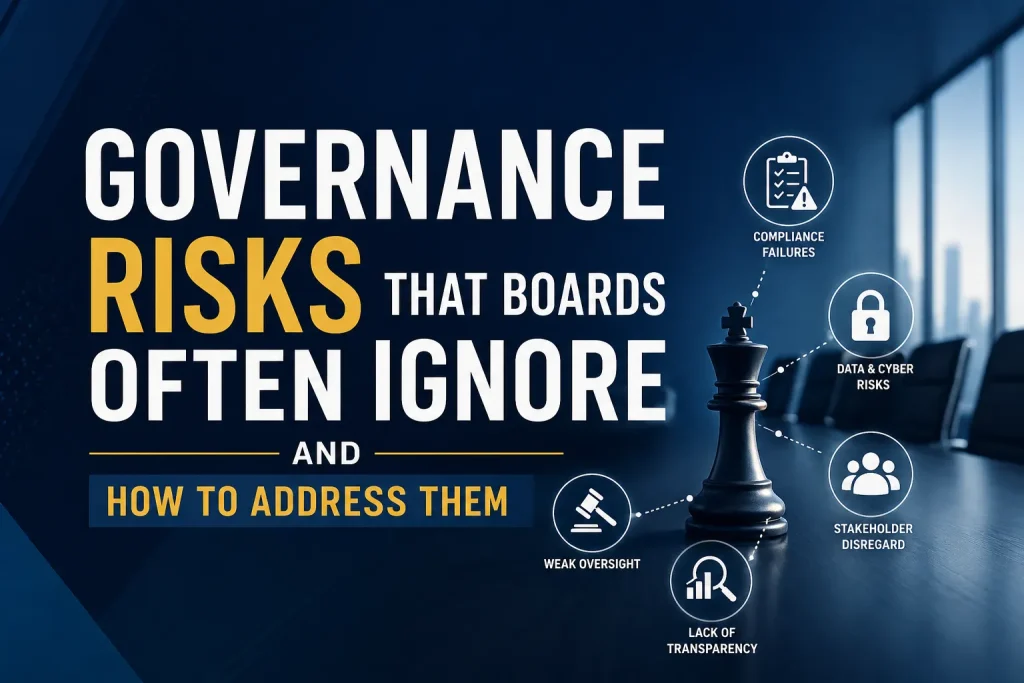
Governance Risks That Boards Often Ignore and How to Address Them
Why Hidden Governance Risks Are More Dangerous Than Visible Ones Boards are typically aware of major risks such as financial […]
Why Hidden Governance Risks Are More Dangerous Than Visible Ones Boards are typically aware of major risks such as financial […]
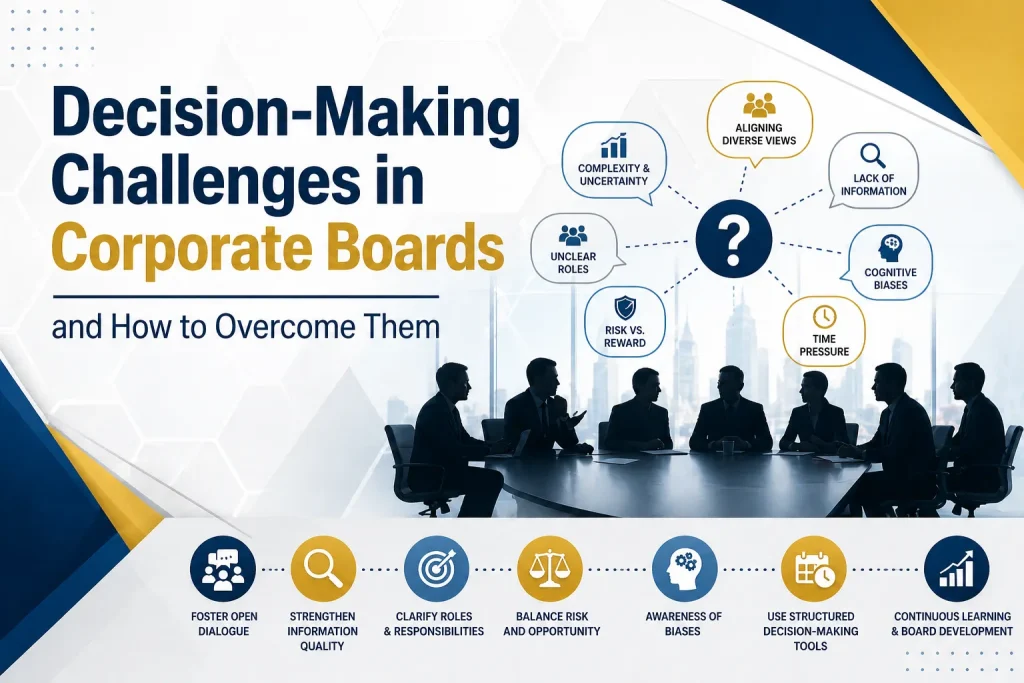
Why Decision-Making Is the Most Critical Function of a Board At its core, the purpose of a corporate board is
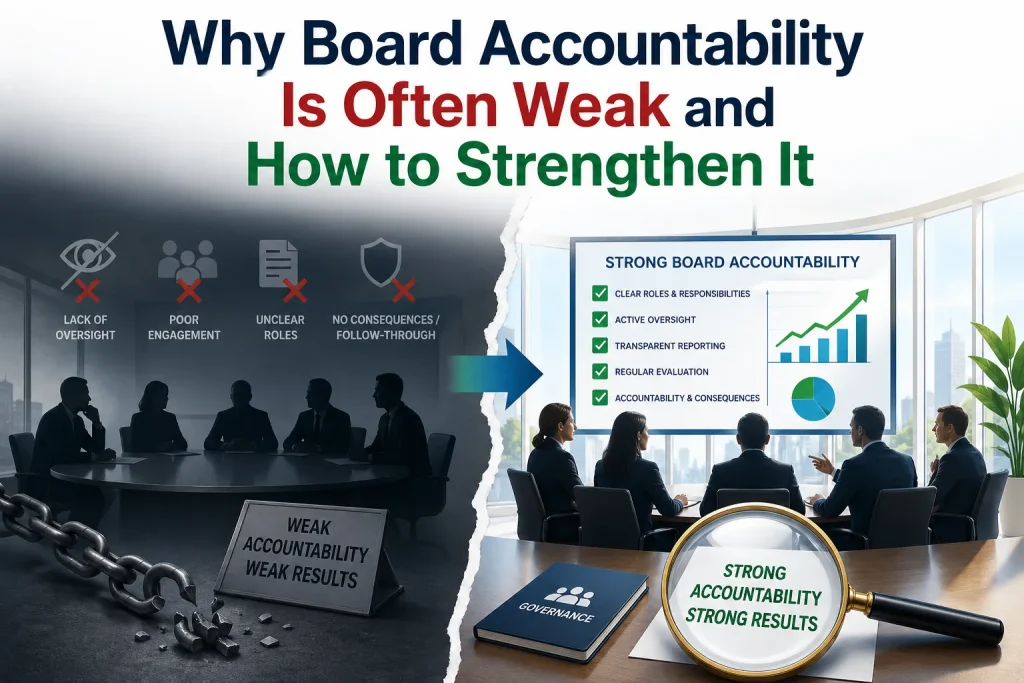
Why Accountability Is the Core of Effective Board Governance Accountability is the mechanism that ensures decisions lead to outcomes and
Why Transparency Is a Core Pillar of Effective Governance Transparency is one of the most fundamental principles of strong corporate
Why Governance Has Become More Complex in Modern Organizations Corporate governance today is significantly more complex than it was a
Why Strategic Oversight Is One of the Most Challenging Responsibilities for Boards Strategic oversight sits at the core of board
Why Corporate Governance Weakness Is a Critical Business Risk Corporate governance is the backbone of organizational stability, accountability, and long-term
Why Boardroom Inefficiencies Are More Expensive Than Most Organizations Realize Boardroom inefficiencies are often viewed as minor operational issues, but
Why Board Organization Is the Silent Driver of Performance Board performance is often judged by outcomes such as strategic decisions,
Why Time Management Is One of the Biggest Boardroom Challenges Time is one of the most valuable resources in any